Solo Female Travel Safety

Solo female travel safety comes down to three habits, not three hundred rules: arrive in daylight with a booked ride and a paid first night, tell one person at home your plan and check in on a schedule you agreed in advance, and stay in control of your own bag, drink and exit at all times. Everything else on this page supports those three. Most trouble on a solo trip is opportunistic rather than targeted, which means the small decisions you make before you leave do the heavy lifting.
Before you pack a personal alarm, a door lock or a self defense spray, run the item through our free Can I Bring It? lookup, because several of the most recommended safety items are carry-on banned, checked bag only, or not allowed at your destination at all.
Updated September 2026. Check your destination's current entry rules and safety information on the State Department country page before you book, and enroll your trip in STEP so the nearest embassy can reach you in an emergency. Conditions change faster than any article can.
The Whole Trip in One Table
Safety is not one decision, it is a decision at each stage. Here is where the real risk sits and what actually reduces it.
| Trip stage | The common problem | The fix that works |
|---|---|---|
| Booking | Arriving after dark in an unfamiliar city | Book flights that land before 4 p.m. local time, and pay for the first night in advance |
| Airport to hotel | Unlicensed taxis and airport touts | Pre book the transfer, or use the official taxi desk and an app you already have installed |
| Accommodation | Ground floor rooms, doors that face a public corridor, no reception at night | Ask for floors 2 to 6, near an elevator, away from stairwells and exits |
| Getting around | Getting lost while visibly checking a phone | Download offline maps, screenshot the route, walk with purpose |
| Nights out | Drinks left unattended, no exit plan | Watch the pour, keep a hand on the glass, set a time you will leave |
| Money | One card, one wallet, everything in one place | Split cards and cash across two bags and the room safe |
| Contact | Nobody knows where you are today | Agreed check in times and a shared live location |
| Emergency | Not knowing who to call or where the embassy is | Save local emergency numbers and the embassy address offline before you land |
Nothing in that table requires courage or paranoia. It requires about 40 minutes of planning spread across the weeks before you go.
The Solo Female Travel Safety Checklist, Step by Step
Work this list in order. It is built to be done once, weeks before departure, so you are not making judgment calls while tired in an airport.
- Read the current advisory for your destination, including the region you are actually visiting rather than the country average, which can hide a lot.
- Enroll in STEP if you are a US citizen, so the embassy has your dates and contact details.
- Book the first night before anything else, in a well reviewed place with 24 hour reception, and pay for it. A guaranteed room is your fallback if everything else goes wrong on day one.
- Fix your arrival for daylight. If the only flight lands at midnight, book the airport hotel for that night and start the trip in the morning.
- Pre book the airport transfer or confirm which app works at your destination and install it at home while you still have familiar Wi-Fi.
- Set up data before takeoff, since a phone with no signal is the single biggest force multiplier for every other risk. Our guide to using your phone abroad covers the eSIM and roaming setup.
- Photograph and cloud store your documents, then email a copy to yourself and to your emergency contact.
- Agree the check in schedule with one person at home, including what they should do if you miss two in a row.
- Buy travel insurance that actually covers medical evacuation, not just trip cancellation. Our travel insurance explained guide breaks down which line items matter.
- Learn five phrases in the local language: help, police, no, hospital, and leave me alone.
- Set your phone's emergency SOS feature and add your medical info to the lock screen card.
- Pack the room kit described below, and check every item against carry-on rules first.
What to Actually Pack for Safety
Most of the popular safety gadget list is either useless, illegal somewhere, or banned from the cabin. Here is what survives contact with reality.
| Item | Worth packing? | The rule to know |
|---|---|---|
| Personal alarm, battery powered | Yes | Allowed in carry-on. Loud, legal everywhere, no training required |
| Portable door lock or door stop alarm | Yes | Allowed in carry-on. Works on inward opening doors, useless on some hotel doors, so bring both types if you can |
| Rubber door wedge | Yes | Weighs almost nothing, works when the fancy lock does not |
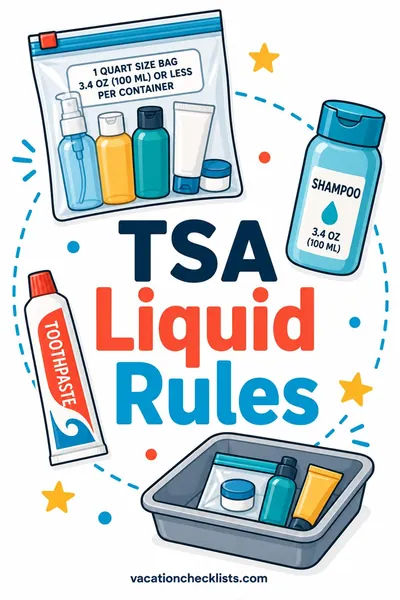
| Self defense spray | Check first | Prohibited in carry-on entirely. Allowed in checked bags only within TSA limits, one container of up to 118 ml (4 fl oz) with a safety mechanism, and illegal in many countries. Check the destination law, not just the airline |
| Tactical or self defense keychain | Usually no | Pointed or bladed versions are carry-on prohibited and illegal in several countries |
| Multi tool or knife | Checked bag only | Any blade goes in checked luggage |
| Doorstop under the handle plus a chair | Free | The oldest trick still works |
| Whistle | Yes | No batteries, no rules, carries further than a scream |
| Cross body bag that zips | Yes | The single best anti pickpocket item there is |
| Dummy wallet | Optional | A few small bills and an expired card, handed over without argument |
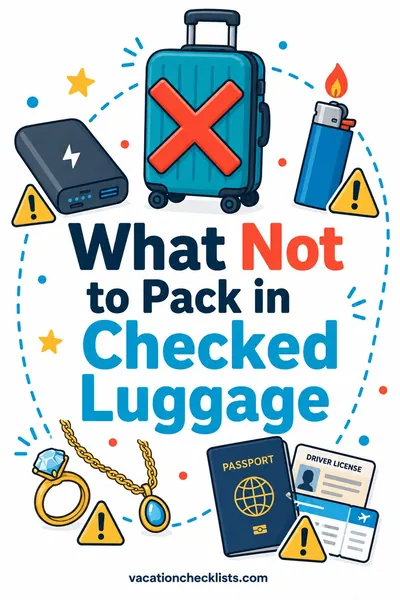
| Portable charger | Yes, carry-on only | Power banks are banned from checked bags. Keep them accessible |
The two items that earn their space every single trip are the personal alarm and the portable door lock. They are small, cheap, legal, and they solve the two scenarios most solo travelers actually worry about: being followed and hearing a key in the door at 2 a.m.
Run each of them through the Can I Bring It? lookup before you pack, since the carry-on versus checked answer differs item by item, and add the rest of the wardrobe with our women's packing list.
A Worked Arrival Plan
Abstract advice fails at 11 p.m. in a taxi line. Here is a real timeline for a 5 day solo trip to a large European city, written out the way you should write your own.
Two weeks out:
- Flight confirmed landing 1:40 p.m. local, which gives about 5 hours of daylight buffer
- Hotel booked and paid for nights 1 and 2, 24 hour reception confirmed by email
- Airport train route screenshotted, including the platform and the last stop
- Ride app installed and payment method added while at home
- Offline map downloaded for the whole city, not just the center
Day of arrival:
- 1:40 p.m. land. 2:30 p.m. through immigration, cash withdrawn from a bank ATM inside the terminal rather than a standalone machine outside
- 2:45 p.m. eSIM connected, message sent to emergency contact with the hotel name and the arrival plan
- 3:00 p.m. airport train, 40 minutes, arriving 3:45 p.m. in full daylight
- 4:15 p.m. checked in, asked for a room above the ground floor, checked the door lock and the window latch, put the portable lock on
- 4:45 p.m. walked the block around the hotel in daylight so the route back is familiar in the dark
- 5:00 p.m. saved the hotel address in the local language as a screenshot, saved the local emergency number, located the nearest pharmacy and 24 hour store
- 7:00 p.m. dinner within a 10 minute walk, back before dark on the first night
Every day after:
- Morning message to the contact at home with the day's plan
- Evening message when back at the room
- Two missed check ins is the agreed trigger for them to call the hotel
That plan cost about half an hour to write and it removes every decision you would otherwise be making while jet lagged. The full pre trip version lives in our solo travel checklist.
Choosing Where to Stay
The accommodation choice does more for your safety than any gadget.
- 24 hour reception beats a keypad and an empty lobby. If something goes wrong at 3 a.m., you want a human downstairs.
- Floors 2 through 6. High enough that a window is not a ground floor entry point, low enough that fire ladders reach.
- Away from the stairwell and the exit door, which is where a corridor gets quiet and unobserved.
- Interior corridor, not exterior walkway, especially at motels where every door faces a parking lot.
- Read the recent reviews for the walk, not the room. A great hotel at the end of a bad ten minute walk is a bad hotel for a solo traveler.
- Female only dorms in hostels are worth the small premium, and a locker that takes your own padlock matters more than the dorm size.
- Short term rentals: check that the listing has a real street address before booking, confirm the check in method, and be wary of hosts who move you to a different unit at the last minute.
In the room, on arrival, every time: lock the deadbolt and the chain, fit your portable lock, check that the window actually latches, look for the second exit on the fire plan behind the door, and confirm the room phone reaches reception.
Getting Around Without Making Yourself a Target
- Never take the first taxi that approaches you. Approach the taxi, or use the official queue, or use an app. The car that comes to you at an arrivals hall is the one to skip.
- Check the plate before you get in, and check the driver's face against the app photo. Say the driver's name and let them confirm rather than asking whether they are your ride.
- Sit in the back, behind the passenger seat, and share your live trip with your contact at home.
- Public transit is usually safer than a private car in big cities during the day, and less so on empty late night lines and empty carriages. Move to the carriage with the most people in it.
- Walk like you know where you are going, even when you do not. Step into a shop or cafe to check the map rather than standing on a corner with the phone out.
- Split the route home into landmarks, so you can navigate the last stretch without looking at a screen.
- If you think you are being followed, cross the street, then cross back. If it continues, walk into any open business and ask the staff for help. Do not go to your accommodation door.
Money, Cards and Documents
- Two cards, two locations. One card in the day bag, one in the room safe or a hidden pocket. If a card is lost or blocked, the trip continues.
- Notify the bank or set travel notices in the app before you go, so the card does not lock on the first purchase.
- Bank ATMs during business hours, ideally inside a branch. Standalone machines in tourist lanes are the ones most often tampered with.
- Carry small bills separately from the main wallet, so you are not opening a fat wallet at a market stall.
- Keep the passport in the room safe and carry a photocopy plus a card sized ID, unless local law requires you to carry the original, which it does in some countries.
- Photograph everything. Passport data page, visa, insurance card, prescriptions, the serial number of your laptop.
If the worst happens, our guide to a lost passport abroad walks through the embassy process, and the travel document checklist is the pre trip version that keeps you from needing it.
The Scams That Target Solo Women Specifically
These come up again and again, and they all work by manufacturing urgency or obligation.
- The friendly local who insists on a "free" tour, then demands payment or leads you to a shop where you are pressured to buy.
- The bar or club bill scam, where a new friend brings you to a specific venue and the bill arrives inflated with security at the door.
- The fake official, asking to inspect your wallet or documents in the street. Real police do not do this. Ask to walk to the station.
- The spilled drink or bird mess distraction, where one person cleans you up and another takes the bag.
- The taxi with a broken meter, agreed on price only after you are moving.
- The hotel front desk call to your room asking you to confirm your card number, which is actually somebody who watched you check in. Hang up and walk down to the desk.
- The romance angle, where somebody invests days in you before the story about a sudden emergency and money.
The pattern is always the same: a stranger creates a fast decision. The counter is always the same: slow it down, say no without explaining, and walk. Our common travel scams guide covers the mechanics of each in more detail.
The Check In System That Actually Catches Problems
A daily "I'm fine" text is not a safety system. A safety system has a trigger and a response.
- Pick one person. Not five. One person who will notice and act.
- Share your itinerary, including flight numbers, hotel names, addresses and confirmation numbers.
- Share live location through your phone's built in feature, permanently for the trip.
- Agree the times. Something like a morning message with the day's plan and an evening message when you are back.
- Agree the trigger. Two consecutive missed check ins, or a missed evening check in plus no location update by morning.
- Agree the response. They call your phone, then the hotel, then the local police, then the nearest embassy, in that order, and they have those numbers already saved.
- Agree a code word that means "call for help, do not ask questions." Something you would never type by accident.
Write all seven of those in a shared note before you fly. It takes ten minutes and it turns a vague good intention into something that works.
Trusting Your Instincts Without Living in Fear
The point of all this planning is that you get to relax once you are there. A solo trip should feel like freedom, not like a security detail.
- The uncomfortable feeling is data. You do not owe anyone an explanation for leaving a bar, changing carriages, or refusing a lift.
- Rudeness is allowed. "No thank you" repeated flatly, without a smile and without a reason, ends almost every street approach. Adding a reason invites a negotiation.
- Blend more than you stand out. Dress closer to how local women dress, keep the expensive camera in the bag between shots, and skip the flashy jewelry.
- Do not broadcast in real time. Post the beach photo the next day, not while you are alone on that beach.
- A wedding band is a tool, not a lie, in places where an unattached woman gets more attention than she wants.
- Eat dinner solo with something to do, a book or a journal, at the bar or a window seat. It is more comfortable and more visible than a corner table.
- Say you are meeting someone. "My friend is joining me in ten minutes" ends a conversation without conflict.
Solo Female Travel Safety FAQ
Is solo female travel safe?
Yes, for most destinations, most of the time, and millions of women do it every year without incident. The risks are mostly petty theft, scams and harassment rather than violence, and all three drop sharply with planning: daylight arrivals, pre booked first nights, licensed transport and a check in system. Pick your destination honestly, read the current advisory for the specific region, and the odds are strongly in your favor.
What are the safest countries for solo female travelers?
Countries that consistently rank well include Japan, Iceland, New Zealand, Portugal, Ireland, Switzerland, Denmark and Singapore, thanks to low street crime, reliable transit and good emergency services. Rankings shift year to year, so treat any list as a starting point and check the current State Department page for the specific area you plan to visit rather than the country as a whole.
What safety items can I bring in my carry-on?
Personal alarms, whistles, portable door locks, rubber door wedges and power banks are all fine in the cabin. Self defense sprays are prohibited in carry-on entirely and only allowed in checked bags within limits, and any blade or pointed self defense keychain is checked bag only. Local law matters as much as airline rules, since several countries ban sprays outright.
How do I stay safe in a hotel room alone?
Ask for a room between floors 2 and 6, away from stairwells and exits, in a property with 24 hour reception. On arrival, lock the deadbolt and chain, fit a portable door lock, check the window latch and find the second fire exit. Never open the door to an unexpected visitor, and call the front desk to verify anyone claiming to be staff.
What should I do if I feel like I am being followed?
Change direction, cross the street, then cross back to confirm. If the person is still with you, walk into any open business, hotel lobby or shop and tell the staff you need help. Do not walk to your accommodation, do not go down a quiet street, and use your personal alarm if the person closes distance.
How often should I check in with someone at home?
Twice a day works for most trips: a morning message with the day's plan and an evening message when you are back at your room. What matters more than the frequency is agreeing in advance what your contact does if you miss two in a row, and making sure they already have your hotel, insurance and embassy details saved.
Should I tell people I am traveling alone?
Not strangers, and not on social media in real time. With hotel staff and other travelers in a hostel common room, being open is usually fine and often useful. A simple "I'm meeting friends later" is enough to close down a street conversation, and posting your locations a day late removes the live tracking problem entirely.
What travel insurance do I need for solo travel?
Look for emergency medical coverage with a high limit, medical evacuation, 24 hour assistance with a real phone line, and coverage for any adventure activity you plan to do. Trip cancellation is nice, but the evacuation line is the one that matters when you are alone and far from a good hospital. Read the exclusions for pre existing conditions before you buy.
The Two Minute Version
Land in daylight with the first night paid for and the ride pre booked. Ask for a room on floors 2 through 6 with a working deadbolt, and add your own portable lock. Carry a personal alarm, split your cards between two places, and set up two daily check ins with one person who knows exactly what to do if you miss them. Say no without explaining, and leave any situation that feels wrong before you can justify why.
Check the gear against the rules with our Can I Bring It? lookup, then work through the full solo travel checklist a couple of weeks before you fly.