Backpacking Europe Packing List

Here's the whole answer up front: a backpacking europe packing list should fit one bag of about 35 to 45 liters, hold five days of clothes, and weigh under 22 pounds packed. You do laundry once a week and you carry nothing else. That's the entire system, and it works for three weeks or three months, because after five days of clothes, adding more changes nothing except how much you hate stairs.
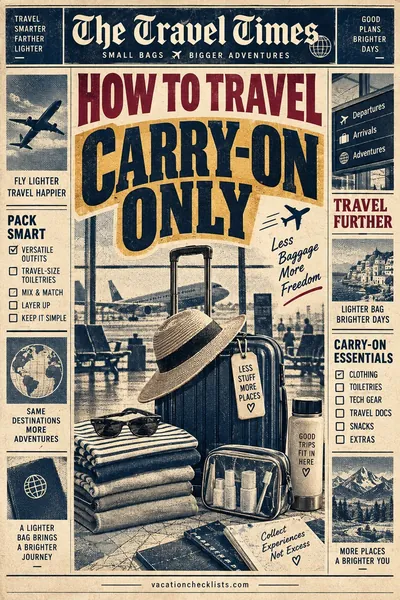
The reason to go carry-on only in Europe isn't the bag fee. It's that you'll carry that bag up four flights of hostel stairs, across cobblestones, onto a regional train with a luggage rack sized for a small bag, and through a metro turnstile that was built in 1904. A big suitcase turns every one of those into a project.
Check your bag against your actual airline's limits with our free carry-on size checker before you buy anything, because European budget carriers are stricter than US airlines and the difference is measured in inches.
Updated September 2026. Airline size limits and entry requirements change. Confirm both with the airline and with official government sources before you travel.
What Bag Size Actually Fits
The two numbers that matter:
| Region | Typical carry-on limit | Notes |
|---|---|---|
| US airlines | 22 x 14 x 9 inches | Most US carriers, wheels and handles included |
| European carriers | 55 x 40 x 23 cm | Roughly the same box, measured metric |
| Budget European carriers | Smaller personal item only | Often a strict sizer at the gate, larger bag costs extra |
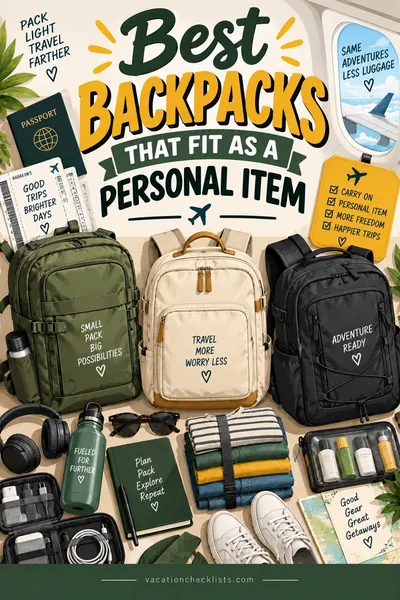
A 40 liter travel backpack usually lands right inside 22 x 14 x 9 inches when it isn't overstuffed. A 45 liter bag often does not, especially if it has external pockets that bulge. The safest target for a Europe trip with budget flights in the middle is a 35 to 40 liter bag with a flat front, no external frame, and compression straps you actually use.
Budget carriers are where people get caught. Some of them include only a small under-seat personal item in the base fare, with a fee to bring a full sized cabin bag, and they enforce it with a metal sizer at the gate. Check your specific flight on the airline's own page, and check your bag's dimensions with the carry-on size checker rather than trusting the manufacturer's liter rating.
One more format decision. A top loading hiking pack is miserable for city travel because everything you want is at the bottom. A panel loading travel backpack that unzips like a suitcase is what you want. Our how to choose luggage guide walks through the trade offs.
The Backpacking Europe Packing List
This is the full list. It's built for a three week to three month trip in spring, summer, or fall, staying in hostels and small apartments, moving every three to five days by train or budget flight.
Clothes: five days, no more
- 5 t-shirts or tops, merino or synthetic blend, not cotton
- 1 long sleeve shirt or light sweater
- 1 pair jeans or travel pants
- 1 pair lighter pants or a skirt or shorts
- 1 outfit you'd wear to dinner, a church, or a nicer bar
- 5 pairs underwear
- 4 pairs socks, one wool
- 1 packable rain jacket
- 1 warm layer, fleece or light puffy that stuffs into its own pocket
- 1 swimsuit
- Sleepwear that works as a hostel common room outfit
- 2 pairs shoes: walking shoes you've already broken in, plus sandals or slip ons
That's it. Two pairs of shoes is the hard rule, and one pair is on your feet on flight days. If your route includes walking the Camino, our Camino de Santiago packing list covers the pilgrim version of this bag. Shoes are the heaviest, bulkiest thing in the bag, and a third pair costs you roughly the space of two days of clothes.
Cotton is the other rule. It stays wet, takes a day to dry on a hostel radiator, and smells after one wear. Merino wool tops go three to four wears before they need washing, which is the whole reason five shirts covers a week.
Bag system
- Main pack, 35 to 40 liters, panel loading
- Daypack that packs flat, or a sling for daily use
- 3 or 4 packing cubes, one per category
- 1 dry bag or waterproof stuff sack for dirty clothes
- 2 or 3 zip bags for liquids, chargers, and documents
Packing cubes aren't just tidiness. In a hostel dorm you live out of your bag without unpacking, and cubes mean you pull out one block instead of excavating. Our packing cubes guide covers the rolling versus folding question with real space numbers.
Toiletries
- Solid shampoo bar and solid conditioner bar, which are not liquids at security
- Bar soap in a vented tin
- Toothbrush, toothpaste, floss
- Deodorant, solid stick rather than gel
- Razor and a small shave stick
- Sunscreen, travel size, refilled as you go
- Any medication in original labeled containers, plus a copy of the prescription
- Small quick dry towel, since many hostels charge for one
- Nail clippers, tweezers, a few bandages, pain reliever, anti diarrheal
Liquids in your carry-on follow the 3-1-1 rule in the US: containers of 3.4 ounces or 100 ml or less, all fitting in one quart sized clear bag, one bag per traveler. The TSA liquids rule page is the source, and European airports run a similar 100 ml limit. Switching to solid toiletries takes most of your bathroom kit out of that bag entirely, which is why long term travelers do it.
Electronics
- Phone plus charging cable
- Universal plug adapter with a Type C and Type G head, or a small multi-country adapter
- Multi port USB charger so one adapter serves the whole group
- Power bank, 10,000 mAh or under, in your carry-on only, never checked
- Headphones
- Kindle or tablet, optional but it replaces books, which are heavy
The plug situation: most of continental Europe uses Type C or Type F (two round pins, 230V). The UK and Ireland use Type G (three rectangular pins). Switzerland uses Type J, and Italy sometimes uses Type L. One adapter with interchangeable heads covers it all. Modern phone and laptop chargers handle 100 to 240V, so you don't need a voltage converter, only a plug shape adapter. Check the small print on any hair tool before you bring it, because those often aren't dual voltage.
Documents
- Passport, valid well past your return date
- Photo of your passport stored offline on your phone, plus one printed copy kept separate from the passport
- Travel insurance policy number and the assistance phone number
- Debit card plus two credit cards from different networks, stored in two different places
- Vaccination records if your route requires them
- Booking confirmations for your first night and your outbound flight
Check passport validity carefully. Many countries require your passport to be valid for a set period beyond your departure date, and a Europe trip that dips into a neighboring country can trip that rule. Our passport validity guide explains how it's actually calculated, and the travel document checklist covers everything else that lives in the document folder.
The Laundry Loop That Makes Five Days Work
This is the mechanism the whole list depends on, and it's simple.
You carry five days of clothes. On day five or six you wash everything. That gives you another five days. Repeat. Your bag never grows, and the trip length stops mattering.
Three ways to do it:
| Method | Time | Best for |
|---|---|---|
| Hostel or laundromat machine | 90 minutes, mostly waiting | Full loads every 5 to 7 days |
| Sink wash with a soap bar | 15 minutes plus overnight drying | Underwear, socks, one shirt |
| Wash and fold service | Drop off, pick up next day | Cities where you're staying 2+ nights |
Sink washing works if you pack for it. A universal sink stopper, a soap bar or a tube of travel detergent, and a length of paracord with two knots as a clothesline weigh almost nothing. Wring a garment in a dry towel before hanging it and it dries in half the time. Merino and synthetic fabrics dry overnight. Denim does not, which is why you bring one pair and wash it at a real machine.
Our full doing laundry while traveling guide covers the machine symbols, the detergent sheet options, and what to do when a hostel machine eats your load.
Worked Example: Six Weeks, Spring, Lisbon to Prague
Here's a real packing plan for a six week trip in April and May, starting warm in Portugal and ending cool in central Europe, with two budget flights in the middle and everything else by train.
Bag: 38 liter panel loading travel backpack, plus a packable 15 liter daypack that lives inside it on flight days.
Cubes: 1. Tops cube: 5 shirts, 1 long sleeve 2. Bottoms cube: jeans, travel pants, shorts, swimsuit 3. Small cube: 5 underwear, 4 socks, sleepwear 4. Loose in the bag: fleece, rain shell, dinner outfit rolled flat
Worn on flight days: jeans, walking shoes, wool socks, t-shirt, fleece tied to the pack. Wearing the heaviest items is the single easiest way to hit a weight limit.
Weight check: 38L bag empty at 3 lb, clothes at about 8 lb, toiletries at 1.5 lb, electronics and adapters at 2.5 lb, documents and daypack at 1 lb, water bottle empty. That's roughly 16 lb, which leaves room for a jacket bought on the road and a couple of gifts without blowing past a 10 kg cabin limit.
Laundry rhythm: machine wash in Lisbon on day 6, Seville on day 12, Barcelona on day 18, Lyon on day 25, Munich on day 32, Prague on day 38. Sink wash underwear and socks in between whenever there's a radiator.
Cold weather handling: Prague in mid May runs about 15 degrees cooler than Lisbon in April. The fleece plus the rain shell layered over a long sleeve covers that range without a coat. Layers beat one heavy item every time, and they pack smaller.
Backpack or Roller Bag for Europe?
Both work. The choice depends on your route.
Take a backpack if you're moving every few nights, staying in hostels or walk-up apartments, using regional trains, or visiting cities with a lot of stairs and cobblestone. Rome, Lisbon, Prague, and Edinburgh all punish wheels.
Take a carry-on roller if you're staying in three or four cities for a week each, using taxis or airport transfers, or you have a back or shoulder issue. Rolling is easier on flat surfaces, and airports and train stations are flat.
The hybrid: a carry-on sized bag with both wheels and stowable backpack straps. It's a little heavier and the straps aren't as comfortable as a real pack, but it covers both situations. For most first Europe trips, this is the safe answer. For the full comparison, see our travel backpack vs suitcase guide.
Whatever you pick, our carry-on only packing guide and the Rick Steves packing list both cover the one bag mindset in different styles, and the Europe packing list has the general version of this page for travelers who aren't backpacking.
Rules You Should Read Before You Go
Two official things worth checking, neither of which is about packing but both of which will ruin a trip if you get them wrong.
The Schengen rule. Most of the Schengen Area allows visitors from many countries to stay 90 days within any rolling 180 day period. It's a rolling window, not a calendar reset, so a spring trip eats into your fall allowance. The US State Department country information pages list current entry rules by country. A fee applies for some entry authorizations, and the amount is set by the issuing authority, so use the official site rather than a lookalike.
Your airline's cabin bag policy. Check it per flight, not per airline, because some fares include a cabin bag and some don't. Budget carriers charge for a full sized cabin bag on their cheapest fares, and paying at the gate costs far more than adding it online. Read the fare rules at booking.
What to Leave Out
- A third pair of shoes
- Jeans, plural. One pair maximum.
- Full sized toiletries. Buy them there, and pharmacies exist in every city.
- A travel iron, a hair dryer, or anything else your accommodation already has
- A money belt worn under clothes, which is uncomfortable and marks you as a tourist the moment you fish in your shirt. Use a zipped front pocket and split your cards instead.
- Guidebooks. One on a phone or an e-reader beats three paperbacks.
- More than one week of clothes, in any form. This is the one people fight hardest and regret most.
The test for anything you're unsure about: if you can buy it in the first city for the equivalent of a lunch, leave it home. Space in the bag is worth more than the item.
Frequently Asked Questions
How big should a backpack be for backpacking Europe?
Between 35 and 45 liters, with 40 being the sweet spot. A 40L panel loading bag fits most carry-on limits when it isn't overstuffed, holds five days of clothes with room left, and stays light enough to walk with for 30 minutes. Anything over 50 liters will not fit as a cabin bag and encourages you to fill it.
How many clothes do I need for a month in Europe?
The same as for a week: about five days of clothes. Trip length changes how often you do laundry, not how much you carry. Five tops, two bottoms, five sets of underwear, four pairs of socks, one warm layer, and one rain layer covers a month exactly as well as it covers ten days.
Should I bring a backpack or a suitcase to Europe?
A backpack if you're changing cities often, staying in hostels or apartments with stairs, or visiting cobblestone cities. A carry-on roller if you're staying in fewer places for longer and using taxis. A hybrid bag with wheels and stowable straps splits the difference and is the low risk choice for a first trip.
What kind of plug adapter do I need for Europe?
Type C or F for most of continental Europe, Type G for the UK and Ireland, plus Type J for Switzerland and sometimes Type L for Italy. A single universal adapter with interchangeable heads covers all of them. You don't need a voltage converter for phones, laptops, or camera chargers, since those handle 100 to 240V. Check hair tools separately.
Can I do laundry while backpacking Europe?
Yes, easily. Most hostels have machines or a laundry service, laundromats exist in every city, and wash and fold drop off shops are common. Sink washing covers you between machine loads. Pack a universal sink stopper, a soap bar or detergent sheets, and a short clothesline, and you're set for any trip length.
What should I not pack for backpacking Europe?
A third pair of shoes, full sized toiletries, more than one pair of jeans, a hair dryer, paper guidebooks, and any clothing you don't already wear at home. The most common overpacking mistake is bringing clothes for a version of the trip you imagine rather than the one you'll have, which is mostly walking, eating, and getting on trains.
How much should my backpack weigh for Europe?
Under 22 pounds packed is a good target, and under 18 is better. Many European carriers set a cabin bag weight limit around 10 kg, which is about 22 pounds, and they do weigh bags at the gate on budget flights. Weigh your loaded bag at home on a bathroom scale before you fly.
Related Guides
- Europe packing list for the general, non backpacking version
- How to pack carry-on only for the technique on any trip
- How to use packing cubes with real space comparisons
- Personal item size guide for the under seat bag rules
- Doing laundry while traveling for the five day loop in practice