How to Choose Luggage

Buy to your airline's carry-on limit, not to the biggest bag on the shelf. The bag that fits the sizer at the gate is the bag you never pay a fee on, and every inch past that limit is a liability rather than a feature. Then check one thing before you buy: whether the stated size includes the wheels and the handle housing, because a lot of listings quote only the body of the case, and that gap is what gets bags pulled at the gate.
Not sure whether the bag you already own fits? Run the numbers through our free carry-on size checker and compare it against the airline you actually fly.
Updated August 2026. Airline size and weight limits change, and they are set by each carrier, not by the TSA. The TSA screens what you bring, it does not set bag dimensions. Always confirm the current limit on your own airline's baggage page before you buy or fly.
Start With the Airline, Then Shop
Most people shop the other way around. They pick a bag they like, then discover on a boarding ramp in Lisbon that it is two inches too tall for that carrier's sizer. The fix is boring and it works: write down the published limit for the airlines you actually use, then only look at bags that clear it with a little room to spare.
Across the big US carriers, a published carry-on limit of 22 x 14 x 9 inches is the most common number, and a few carriers publish a slightly larger box. Outside the US, the limits are usually stated in centimeters and, more importantly, they often come with a weight limit as well, which most US domestic carry-on rules do not have.
| Region or carrier type | Commonly published carry-on limit (August 2026) | Weight limit? |
|---|---|---|
| Most large US carriers | 22 x 14 x 9 inches, wheels and handles included | Usually none for carry-on |
| Some US carriers with roomier boxes | Around 24 x 16 x 10 inches | Usually none |
| Many European carriers | About 55 x 40 x 20 cm, roughly 21.6 x 15.7 x 7.9 inches | Yes, commonly 8 to 10 kg |
| Many Asian and Middle Eastern carriers | About 55 x 40 x 20 cm | Yes, commonly 7 to 10 kg |
| Regional jets on any carrier | Same published limit, much smaller real bins | Gate-check is common |
Treat that table as a shopping guide, not as gospel. Limits differ by carrier, by fare type, and sometimes by aircraft, and they get revised. The only number that counts is the one on your airline's own baggage page on the day you fly. When a carrier's page says to check with them, take that at face value rather than trusting a comparison chart, including ours.
One more sizing rule worth knowing: the depth number, that 9 inches, is the one bins are least forgiving about. A bag that is an inch over on depth will fight you far more than a bag an inch over on length.
The Sizing Trap: Wheels and Handles Count
Here is the single most expensive mistake in luggage shopping. Manufacturers frequently quote the body dimensions of a case, meaning the shell alone, without the wheels underneath or the retractable handle housing on the back. Airlines measure the bag as it exists in the real world, wheels, feet, handle bumps, external pockets, and all.
So a case sold as a "22 inch carry-on" can measure 23.5 to 24 inches from the bottom of the wheels to the top of the handle. That bag will not go into a 22 inch sizer. It fit the spec sheet. It did not fit the airline.
How to avoid it:
- Look for the phrase "overall dimensions" or "with wheels" in the listing. If the listing says "case dimensions" only, assume it is the body.
- If both numbers are given, use the larger set. Always.
- Measure your own bag at home with a tape measure, standing upright on the floor, handle fully retracted. Measure from the floor to the highest point.
- Add the pockets. A front laptop pocket stuffed with a charger can add half an inch of depth on its own.
- Check the result against your carrier with the carry-on size checker.
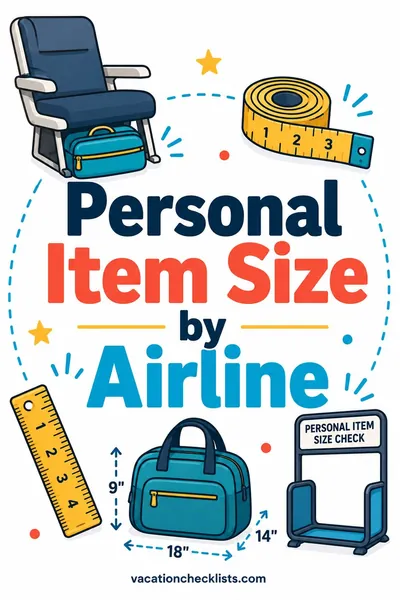
While you are measuring, do your under-seat bag too. Personal item limits are separate, smaller, and enforced differently, and there is a full breakdown in our personal item size guide.
Worked example. You are looking at a bag listed as 22 x 14 x 9 inches. The fine print says "case dimensions." You measure the display model in the store: 23.5 inches floor to retracted handle, 14.5 inches wide with the side grips, and 9.75 inches deep with the front pocket empty. Total linear inches, 47.75 against a 45 inch allowance. That bag is over on all three axes, and the front pocket has not even been packed yet. The identical looking bag next to it lists "overall 21.7 x 13.8 x 9" and measures exactly that. Same price, same look, and one of them gets gate-checked.
Hard Shell vs Soft Side
There is no universal winner here. There is a right answer for how you travel.
| Factor | Hard shell | Soft side |
|---|---|---|
| Protection for fragile items | Better. The shell spreads impact | Weaker. Pressure transfers to contents |
| Water and spill resistance | Better. Wipes clean, seams are the weak point | Weaker, unless coated fabric |
| Expandability | Limited. Some have an expansion zipper, most gain little | Better. Fabric gives, external pockets add real volume |
| Weight for the same size | Usually heavier, though modern polycarbonate closes the gap | Usually lighter in the budget and mid range |
| Grab-and-go access | Poor. Must lay flat and open like a clamshell | Good. Front pockets hold a laptop, documents, a jacket |
| Overpacking tolerance | Low. It closes or it does not | High, which is also how you blow a weight limit |
| How it fails over time | Cracks at the corners, wheel housings split, scuffs permanently | Fabric abrades and frays, zippers blow, corners go soft |
| Repairability | Harder. A cracked shell is usually the end | Easier. Fabric and zippers can be patched or replaced |
The short version. Hard shell suits fliers who check bags, carry breakables, or want a clean wipe-down after a rainy transfer. Soft side suits fliers who need front pocket access in a boarding line, who squeeze bags into car trunks and overhead bins on small aircraft, and who value being able to stuff one more thing in.
A note on the "hard shell cracks" worry. Polycarbonate flexes and comes back, so a good polycarbonate case takes a hit better than its reputation suggests. The cheap, brittle failure people remember usually came from a low grade ABS shell, which is covered in the materials section below.
Two Wheels vs Four Wheels
Four wheel spinners glide beside you and take almost all the weight off your arm on a smooth surface. Two wheel rollers tilt and drag, so you carry part of the weight, but they handle rough ground far better. If you are still deciding whether you want wheels at all, our travel backpack vs suitcase guide covers that choice.
The real trade-off is the surface you actually walk on.
| Surface | Four wheel spinner | Two wheel roller |
|---|---|---|
| Airport terminal, polished floor | Excellent, effortless | Fine, but you carry weight |
| Long moving walkway | Excellent, glides alongside | Fine |
| Cobblestones, brick, gravel | Poor. Small wheels catch and jam, casters twist | Much better. Larger wheels bridge gaps |
| Curbs, steps, train platforms | Awkward to lift and rebalance | Easy, it is already tilted |
| Snow, sand, grass | Very poor | Poor, but usable |
| Standing on a slope or a train aisle | Rolls away from you | Stays put |
| Packing capacity for the same external size | Slightly less, wheels sit outside the shell | Slightly more, wheels recess into the body |
| Long-term durability | Casters are usually the first thing to break | Fewer, bigger, better protected wheels |
If your trips are US airports and hotel lobbies, take the spinner. If your trip involves an old European city center, a train platform, or any distance on a sidewalk that is not new, two big wheels will make you much happier. A spinner on wet cobblestones with a dead phone is a specific kind of misery.
Whatever you pick, check that the wheels are replaceable and that the maker sells the parts. Wheels are the number one failure point on all luggage, and a bag with sold-separately wheels lasts about twice as long.
The Empty Weight Nobody Checks
This is the most underrated number on the spec sheet, and it matters most on exactly the flights people forget about: the ones where the carry-on gets weighed.
If your airline allows 10 kg, about 22 pounds, for a cabin bag, then every pound the empty case weighs is a pound of your clothes you cannot bring.
Worked example. Three carry-ons, same 22 x 14 x 9 footprint, similar price.
- Bag A, aluminum, empty weight 10.4 pounds. Under a 22 pound cabin limit you have 11.6 pounds of contents.
- Bag B, polycarbonate, empty weight 6.8 pounds. Same limit, 15.2 pounds of contents.
- Bag C, lightweight soft side, empty weight 5.2 pounds. Same limit, 16.8 pounds of contents.
That is 5.2 pounds of difference between A and C, which is roughly a pair of shoes, a sweater, and a book. Same suitcase footprint, same fare, entirely different trip.
The same arithmetic runs on checked bags. A 50 pound checked allowance with an 11 pound case gives you 39 pounds of stuff. Swap in a 9 pound case and you get 41. Two free pounds for choosing more carefully, every single flight, forever.
Weigh the bag before you buy it if the store will let you, because listed empty weights run optimistic surprisingly often. A cheap luggage scale settles the argument at home too, and it costs less than one overweight fee. If you want the fee math, our guide to checked bag fees explained breaks down where the charges actually land.
Luggage Materials Compared
| Material | Durability | Weight | What it is good at | Where it disappoints |
|---|---|---|---|---|
| Polycarbonate | High. Flexes under impact and springs back | Light to medium | The best all-round hard shell, strong for its weight | Scuffs and scratches show, premium price |
| ABS | Low to medium. Rigid and brittle in cold | Lightest hard shell | Cheap, colorful, fine for occasional trips | Cracks at the corners, especially after cold cargo holds |
| Polycarbonate and ABS blend | Medium | Light | A real budget compromise, better than pure ABS | Quality varies wildly by brand and blend ratio |
| Polypropylene | Medium to high. Very flexible | Light | Tough and cheap, good dent recovery | Bulkier walls, less premium feel |
| Aluminum | Very high against puncture and crushing | Heaviest by a wide margin | Serious protection, ages into a patina people love | Dents permanently, heavy, expensive, eats the weight budget |
| Ballistic nylon, 1050 to 1680 denier | Very high abrasion resistance | Medium | The toughest soft side, resists tearing and scuffing | Not waterproof on its own, heavier than ripstop |
| Cordura nylon | High | Medium | Great abrasion resistance, slightly softer hand | Same water caveat |
| Ripstop nylon and recycled polyester | Medium | Lightest | Featherweight bags and packable duffels | Punctures and abrades faster |
| Polyester, low denier | Low | Light | Budget bags and short trips | Fades, frays, zippers fail first |
Two things to read on a fabric bag's tag. Denier is thread thickness, so 1680D ballistic nylon is heavier duty than 600D polyester. And any water resistance comes from a coating that wears off, so treat every soft bag as showerproof rather than waterproof, and keep electronics in a dry bag inside it.
Zippers, Locks, and What They Actually Protect
Zippers are where the money hides. There are two kinds on luggage.
Coil zippers use a spiral of nylon monofilament. They are light, flexible, and self-healing after a minor jam, which is why they are on most bags. Their weakness is a known one: a coil zipper can be split open with a ballpoint pen and then closed again by running the sliders back over it, leaving no visible damage. A locked coil zipper stops an opportunist, not a thief who knows this.
Chain zippers, sometimes called tooth zippers, use individual metal or molded teeth. They are heavier and stiffer, they do not self-heal, and they resist that pen trick because there is no continuous coil to separate. Higher end cases, and most aluminum cases with a frame latch instead of a zipper, avoid the problem entirely.
If a bag will be checked with anything you would hate to lose, prefer a chain zipper or a latching frame. For a carry-on that never leaves your sight, a good coil zipper is fine.
TSA approved locks, sold under the Travel Sentry and Safe Skies programs, have a keyway that screening officers can open with a master key, so your bag can be inspected without cutting the lock off. That is the whole benefit. Understand the limits clearly:
- They protect against casual opportunists and against zipper pulls being tugged open in transit.
- They do not defeat the pen attack on a coil zipper, which bypasses the lock entirely.
- They are not high security locks. The master key system is a published standard.
- They do not stop anyone with bolt cutters or a knife.
- Airlines and screening agencies do not guarantee your lock survives an inspection.
Use them, but pack as though a determined person could get in, which means valuables, medication, electronics, keys, and documents ride in your carry-on. Our list of what not to pack in checked luggage covers that in detail.
Warranty Terms and What "Lifetime" Usually Excludes
"Lifetime warranty" is the most oversold phrase in luggage, because in almost every case it covers manufacturing defects in materials and workmanship and nothing else. The failures you are most likely to have are usually excluded.
What a lifetime warranty typically does cover: a wheel that seizes on its own, a handle that will not lock, a seam that separates without impact, a zipper slider that fails in normal use.
What it typically excludes:
- Airline and carrier damage. This is the big one. Cracked shells, torn fabric, and snapped handles from baggage handling are almost always excluded, and you are pointed at the airline instead. That claim goes to the carrier, and there are steps for it in our guide to lost luggage and what to do.
- Cosmetic wear: scuffs, scratches, fading, dents.
- Overpacking damage, which is how most zippers actually die.
- Theft, loss, and anything a third party did.
- Damage from unauthorized repairs.
- Anything after a transfer of ownership, because most warranties cover only the original purchaser with proof of purchase.
Read three specific lines before you buy: does the warranty cover airline damage even partially, does it require you to ship the bag at your own cost, and does it pay for repair, replacement, or store credit. A ten year warranty that covers airline damage for the first two years is worth more than a lifetime warranty that never does.
Keep the receipt and register the bag if the brand offers it. Warranty claims without proof of purchase go nowhere.
How to Choose Luggage for Checked Bags: The 62 Linear Inch Rule
Checked bag sizing runs on a single combined number rather than three separate ones. Add length plus width plus height, and most carriers publish a limit of 62 linear inches, about 158 cm, for a standard checked bag. Go over it and you are into oversize fees, which are typically far steeper than overweight fees.
The math is simple and most people never do it.
| Common case size (inches) | Linear inches | Under 62? |
|---|---|---|
| 25 x 18 x 11 | 54 | Yes, comfortably |
| 27 x 19 x 11 | 57 | Yes |
| 28 x 20 x 12 | 60 | Yes, with 2 inches spare |
| 29 x 20 x 12 | 61 | Yes, barely |
| 30 x 21 x 13 | 64 | No, oversize |
| 32 x 22 x 13 | 67 | No, well oversize |
Two warnings. First, the same body versus overall trap applies here, so a 29 inch case that measures 30.5 inches with wheels lands at 62.5 linear inches and is technically oversize. Second, expansion zippers count. A bag at 60 linear inches closed can hit 63 expanded, and the sizer does not care that you expanded it "just for the trip home."
For a family, a pair of 27 inch cases beats a single 32 inch monster every time. They come in under the size limit, they stay under the weight limit, and neither one is a two-person lift.
Weight limits are separate from size. Most carriers publish 50 pounds, about 23 kg, for standard checked bags, with a higher allowance on some premium fares and a fee band above that. Buying a lighter empty case is the cheapest way to gain packing weight you will use on every trip.
Your Luggage Buying Checklist
Size and fit - Overall dimensions with wheels and handle, not case-only dimensions - Clears your usual carrier's carry-on limit with about half an inch to spare - Checked bags under 62 linear inches, measured with wheels and expanded - Personal item measured separately for the under-seat space
Weight - Empty weight noted and, ideally, verified on a scale - Under about 7 pounds for a carry-on, under about 10 pounds for a large checked case
Build - Material matched to how you travel, per the materials table above - Chain zipper if it gets checked, coil is fine for cabin only - Replaceable wheels, and the brand actually sells them - Telescoping handle that locks at more than one height and does not rattle
Practical - Two wheels for rough ground, four for smooth floors - Front pocket access if you need a laptop out at security - A light color or a bright tag so you can spot it on the belt - TSA approved lock, with a clear understanding of what it does not do
Paperwork - Warranty terms read, especially the airline damage clause - Receipt saved and the bag registered with the brand
A Worked Example: One Bag for Ten Days in Italy
You are flying a US carrier over, then two intra-Europe hops with a 10 kg cabin limit, and your destinations have cobbled streets.
- Size. The binding constraint is the European carrier at roughly 55 x 40 x 20 cm, which is tighter than the 22 x 14 x 9 inch US box on depth. So shop to 55 x 40 x 20 cm overall, wheels included, and the US flights take care of themselves.
- Weight. 10 kg is about 22 pounds, and it will be enforced. A 6.5 pound case leaves 15.5 pounds of contents. A 9 pound case leaves 13. Take the lighter one.
- Wheels. Cobblestones decide it. Two wheels.
- Material. Polycarbonate for the weight to strength ratio, or ballistic nylon if you want a front pocket for the train tickets.
- Zipper. It stays in the cabin, so a coil zipper is fine, plus a small lock for the hotel.
- Result. A 21.5 x 15.5 x 7.5 inch two wheel polycarbonate bag at 6.5 pounds empty. Then pack it properly, which is a separate skill covered in how to pack a suitcase.
The bag most people would have bought instead, a 24 inch four wheel spinner at 9.5 pounds, fails the cabin limit on both size and weight, and fights the sidewalks the whole trip.
Frequently Asked Questions
What size luggage should I buy?
Buy to the limit of the airline you fly most, not to the biggest bag available. For most US carriers that means a carry-on at or under 22 x 14 x 9 inches overall, and a checked bag under 62 linear inches. If you fly European or Asian carriers, shop to about 55 x 40 x 20 cm and check the weight limit too.
Is hard shell or soft side luggage better?
Neither wins outright. Hard shell protects fragile contents better and wipes clean, while soft side is lighter in the budget range, expands, and gives you front pocket access in a boarding line. Pick hard shell if you check bags with breakables, soft side if you need quick access and squeeze into tight bins.
Are four wheel spinners worth it?
On smooth airport floors, absolutely, because the bag carries its own weight beside you. On cobblestones, gravel, curbs, and train platforms they are noticeably worse than two big wheels, and the casters are usually the first part to break. Match the wheels to the ground you will actually walk on.
Does the airline measure my bag with the wheels?
Yes. Airlines measure the bag as it stands, including wheels, feet, handle housing, and bulging pockets. Manufacturer listings often quote the case body only, which is why a "22 inch" bag can measure 24 inches. Measure yours from the floor to the top of the retracted handle before you fly.
What does a TSA approved lock actually protect against?
It stops casual tampering and keeps zipper pulls from being tugged open in transit, and it lets screening officers inspect your bag without cutting the lock off. It is not a high security lock, it does not defeat the pen trick on a coil zipper, and it does not stop anyone with a cutting tool. Keep valuables in your carry-on regardless.
How much should a carry-on weigh empty?
Aim under about 7 pounds for a carry-on and under about 10 pounds for a large checked case. Empty weight matters most on carriers that weigh cabin bags, where a 4 pound difference in the case is 4 pounds of clothes you cannot bring. Listed weights run optimistic, so weigh it yourself if you can.
What is the 62 linear inch rule?
Add your checked bag's length, width, and height. Most carriers set the standard checked limit at 62 linear inches, about 158 cm, and charge an oversize fee above it. Measure with the wheels on and the expansion zipper open, since both count at the counter.
Does a lifetime luggage warranty cover airline damage?
Usually not. Lifetime warranties typically cover manufacturing defects in materials and workmanship, and most exclude damage caused by airlines and other carriers, along with cosmetic wear and overpacking damage. Read the airline damage clause specifically, and file carrier damage with the airline instead.
The Short Version
Learning how to choose luggage comes down to five decisions, in order.
- Find your airline's published limit, then shop to it with a little margin.
- Confirm the listed size is overall, with wheels and handle, not case-only.
- Weigh the empty bag, because every pound of case is a pound of clothes you lose.
- Match the shell and the wheels to your actual trips, not to the showroom floor.
- Read the warranty's airline damage clause before you pay.
Do those five and the bag disappears into the background of your trip, which is exactly what a good one is supposed to do. Check what you already own against your carrier with the carry-on size checker, and if it clears, you may not need to buy anything at all.