Long Layover Tips

The first question on any long layover is not what to do with the time. It's whether you can legally leave the airport at all, and that depends on your passport and the country's transit rules, not on how many hours you have. A 12 hour layover in a country that requires a transit visa for your nationality means 12 hours inside the terminal. A 5 hour layover somewhere that admits you visa free can be an afternoon in the city.
So settle the legal question first, the baggage question second, and only then plan the fun part. Packing for a long layover is its own small job, and our free packing list generator will build you a carry-on list that survives a day away from your checked bag.
Updated August 2026. Transit and visa rules are set by each destination country's government and change without much notice. Confirm your specific route on the official government immigration site for the transit country, and check your own country's guidance on travel.state.gov, before you plan anything outside the terminal.
What Counts as a Long Layover?
Airlines don't have one shared definition, and the word gets used loosely. Here's the practical version most travelers work with.
A connection under about 2 hours is just a connection. You walk, maybe you clear security again, and you board. Between 2 and 4 hours you have breathing room but not much else. Past 4 hours you have a genuine block of time, and past about 8 hours you're deciding between a city visit, a lounge, or a hotel bed.
The one number that actually matters to the airline is the minimum connection time for that airport, which is the shortest gap the airline will sell you. If your itinerary was booked as one ticket, the airline has already decided your connection is legal on paper. That doesn't make it comfortable.
Long Layover Tips by Layover Length
This table is the fastest way to decide what your layover realistically is. Times assume a single ticket with bags checked through. Add at least 90 minutes to every row if you're on separate tickets and have to collect and re-check bags.
| Layover length | What's realistic | What to do |
|---|---|---|
| Under 2 hours | Walking to the gate, one restroom stop, maybe a coffee | Check the arrival and departure terminals before you land. Sit near the front of the plane if you can. Don't plan on food |
| 2 to 4 hours | A proper meal, a shower at some airports, work at a desk | Find your departure gate first, then explore. Charge everything. This is not enough time to leave the airport in most countries |
| 4 to 8 hours | Lounge access, a real rest, a short city trip at a few well connected airports | Check transit rules. If leaving, allow 3 hours minimum back at the airport before departure |
| 8 to 14 hours | A city visit, a day room, a long lounge session, a sleep pod | Leave only if you clear immigration quickly and transit links are direct. Otherwise book a day room or lounge |
| Overnight (14 hours or more) | A hotel, an airport hotel, or a transit hotel inside the terminal | Book a bed. Airport benches lose to a cheap airport hotel every time. Confirm the terminal is open all night, because some close |
Two things break this table. Airports that close overnight, which is more common than travelers expect at smaller airports, and airports where you cannot re-enter security until a few hours before your flight. Look both up before you commit to a plan.
Can You Leave the Airport During a Layover?
Sometimes. It depends on three things, in this order.
1. Your nationality and the transit country's rules. Some countries let most visitors enter visa free for short stays. Some require a visa for entry but have a separate transit exemption if you stay airside. Some require a transit visa even if you never leave the terminal, which surprises people every year. Your nationality, not your destination, drives this.
2. Whether the airport has a sterile transit area. At many airports, arriving international passengers connecting onward never pass through immigration at all. At others, everyone clears immigration and re-checks in, which means you're technically entering the country and need whatever entry permission that requires.
3. Your ticket structure. On separate tickets you may have no choice but to clear immigration to collect your bag, which turns "should I leave?" into "I have to."
Where to Check, and Why Not a Blog
Do not take a verdict about your own transit eligibility from a travel blog, including this one. The rules are per nationality, per airport, per ticket type, and they change. The authorities that actually decide are:
- The destination or transit country's own immigration or foreign ministry website, which is the primary source
- The U.S. Department of State country information pages at travel.state.gov for U.S. passport holders, which summarize entry, exit, and transit requirements per country
- Your airline, which checks documents at the departure gate and will deny boarding if you don't have what the transit country requires
If those three disagree, the transit country's own government site wins, and the airline's gate agent still gets the final word on whether you board. When a source says "check with the carrier," that's not a dodge, it's the honest answer.
The Practical Version If You Do Leave
- Give yourself a hard turnaround time, not a vague plan. Work backward from departure: 3 hours before departure at the airport door for an international flight, plus travel time, plus a 30 minute buffer.
- Confirm the train or metro runs both ways at the hours you need it. Late night service gaps strand more people than traffic does.
- Carry your passport, boarding pass, and anything valuable. Never leave documents in a locker or a bag.
- Know where left luggage is and what it costs, and confirm the hours. Some close before the last flights leave.
- Check whether your carry-on will get a second security screening on return, because liquids you bought in the city may not survive it.
Our guide to how early to arrive at the airport has the buffers for domestic and international departures. Use the international numbers when you're re-entering security after a city trip, since you're effectively starting your airport day over.
Do Checked Bags Transfer Automatically?
This section strands more travelers than anything else on this page, so read it even if you think you know.
On a single ticket, your checked bag is normally tagged through to your final destination and transferred by the airline. You do not collect it at the connection. Two common exceptions: your first port of entry into a country may require you to collect your bag for customs and immediately re-check it, and some airline pairings without a baggage agreement won't through-tag. Ask at the check-in desk on departure and look at the tag. The three letter code printed on it tells you where the bag is going. Our guide to rechecking bags on a connecting flight covers every case where you have to collect it.
On separate tickets, assume the bag does not transfer. The second airline has no contract with the first and no obligation to touch your bag. You will normally have to:
- Clear immigration into the transit country, which requires whatever entry permission that country demands of your nationality
- Collect your checked bag from the arrivals belt
- Exit to the public area
- Check in again with the second airline, which may not open its desk until a few hours before departure
- Clear security and immigration again for the second flight
That whole sequence takes 2 to 3 hours at a busy airport, and it can take longer if the second airline's check-in desk opens late. That is the single biggest reason a "6 hour layover" on separate tickets is not a leisurely 6 hours.
A Worked Example
You book two separate tickets to save money. Flight A lands at 10:15 a.m. Flight B departs at 4:30 p.m. On paper that's a 6 hour 15 minute layover, which sounds generous.
Now count the real time:
- 10:15 a.m. landing, 10:35 a.m. off the plane after taxi and deplaning
- 10:35 to 11:20 a.m. immigration queue, which can easily run 45 minutes at peak
- 11:20 to 11:50 a.m. waiting at the belt for the bag
- 11:50 a.m. to 12:05 p.m. customs and exit to the public hall
- Airline B's check-in desk opens 3 hours before departure, so 1:30 p.m. at the earliest
- 1:30 to 2:00 p.m. check in and drop the bag
- 2:00 to 2:45 p.m. security and outbound immigration
- 2:45 p.m. at the gate area, with 1 hour 45 minutes to spare
Your 6 hour 15 minute layover is really about 1 hour 45 minutes of free time, and roughly 90 minutes of it is spent sitting in a landside hall waiting for a check-in desk to open. Leaving the airport was never on the table.
Flip one variable and it collapses. A 60 minute immigration delay or a late inbound flight and you're sprinting. That's the honest math behind separate tickets.
Self Transfer Risk: A Missed Connection Isn't the Airline's Problem
Here's the part that costs real money. On a single ticket, if flight A is late and you miss flight B, the airline rebooks you at no charge because it sold you the connection. That's the whole value of a through ticket.
On separate tickets, there is no connection to protect. If flight A is late, airline B sees a passenger who didn't show up. The standard outcome is a forfeited fare and a new ticket bought at the walk-up price on the day, which is the most expensive way to buy a flight. Airline A owes you nothing beyond its obligations on its own flight.
Some booking platforms sell a "self transfer guarantee" or connection protection product that promises to rebook you. Read exactly what it covers, what the payout cap is, and how you claim, because the terms vary a lot between providers. Some travel insurance policies include missed connection cover, and many exclude self connections specifically. Our guide to travel insurance covers how to read those exclusions.
How to reduce the risk if you're self connecting anyway:
- Build a minimum 4 hour gap for domestic to domestic, and 5 to 6 hours where an international arrival and a bag collection are involved
- Take the first flight of the day for the inbound leg, because delays compound through the day
- Carry on only, if the second airline's fare allows it, since that removes the entire bag collection step
- Book the last flight of the day on the outbound leg only if you can afford to overnight there
- Keep the second airline's app installed and the booking reference somewhere offline
Airport Amenities Worth Using
Once you know you're staying airside, the goal is to make the hours cost less and hurt less.
Lounges. Three ways in: a lounge membership program, a credit card benefit if you already hold one, or a paid day pass bought at the door or through a lounge booking app. Day pass pricing varies enormously by airport and lounge, so check the specific lounge rather than assuming a number. A pass usually gets you seating, food, drinks, Wi-Fi, and power, and sometimes showers. For a layover over about 5 hours, the arithmetic often works out in favor, since a sandwich, two coffees, and a beer in the terminal is not far off a pass at many airports.
Showers. Some lounges include them. Some airports also have standalone pay-per-use shower suites in the terminal, and some transit hotels sell shower access without a room. A shower changes an overnight layover more than any other single thing.
Sleep pods and day rooms. Several large hubs have pod operators or transit hotels inside the secure area, bookable by the hour or in blocks. Inside security means no immigration, which matters if you can't legally enter the country. Book ahead where you can, because the good ones sell out.
Quiet areas. Look for chapels and prayer rooms, which are quiet by design, and remember to be respectful of their purpose. Also try upper-level food courts after the lunch rush, gates with no departures for a few hours, and airline lounges' quiet rooms. Some airports publish a terminal map that marks rest zones and reclining seat areas.
Free things. Many big airports have art installations, gardens, observation decks, showers in the gym, playgrounds, or museum exhibits. A few have free city tours for passengers with long layovers, which come with their own eligibility rules you'd need to confirm with the operator.
Overnight Layovers: Is a Hotel Worth It?
Almost always yes if the layover is 10 hours or more and the airport isn't set up for sleeping.
Run the comparison honestly. A night on a metal bench costs nothing and buys you a bad next day: poor sleep, a stiff back, a higher chance of missing an early alarm, and a first day at the destination you'll spend recovering. A budget airport hotel or a transit hotel costs money and buys you a shower, a locked door, a bed, and an alarm that works.
Three hotel types to compare:
| Option | Where it is | Best for | Watch out for |
|---|---|---|---|
| Transit hotel | Inside the secure area | Passengers who cannot legally enter the country | Books out early, small rooms, often sold in blocks of hours |
| Airport hotel | Landside, walking distance or a shuttle | Passengers who can clear immigration | Shuttle frequency overnight, and whether you need entry permission |
| City hotel | A metro or train ride away | Layovers of 14 hours or more with fast transit links | Late night transit gaps, plus your full airport buffer in the morning |
Check three details before booking: whether the hotel offers a free 24 hour shuttle, whether check-in is possible at the hour you'll arrive, and whether the room is refundable in case your inbound flight is delayed. On a long delay, a nonrefundable room you never reach is money gone.
If your airline caused the overnight through a schedule change or a delay, ask at the transfer desk whether a hotel and meal voucher applies. Rules differ by airline, route, and jurisdiction, and the airline's own conditions of carriage are the authority for your specific ticket. Ask, politely and early, before the desk gets busy.
What to Carry for a Long Layover
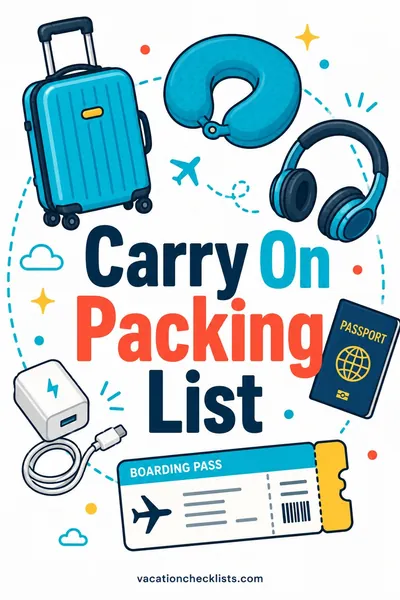
Everything below lives in your carry-on, because your checked bag is not available to you during the layover. Our carry-on packing list is the full version, and this is the layover-specific subset.
Comfort
- [ ] A layer, because terminals overnight are cold
- [ ] Eye mask and earplugs, or noise canceling headphones
- [ ] Inflatable neck pillow that packs flat
- [ ] Clean socks and a change of underwear
- [ ] A light scarf or wrap that doubles as a blanket
Hygiene
- [ ] Toothbrush and travel toothpaste, TSA liquid rules apply to the paste
- [ ] Face wipes or micellar water in a travel size
- [ ] Deodorant, solid form travels easier
- [ ] Small towel or quick-dry cloth if you plan on a shower
- [ ] Contact lens case and glasses, since dry cabin air plus 12 hours in lenses is misery
Tech and Power
- [ ] Power bank in your carry-on, never in checked baggage
- [ ] Charging cables for every device, at least two
- [ ] Universal plug adapter, because the transit country's sockets may differ from both ends of your trip
- [ ] Downloaded entertainment, since airport Wi-Fi often caps at a short free session
- [ ] Headphones, plus a wired backup pair
Documents and Money
- [ ] Passport with adequate validity for every country you touch
- [ ] Any transit visa or entry authorization the transit country requires
- [ ] Printed and offline copies of both boarding passes, especially on separate tickets
- [ ] A small amount of local currency for lockers, transit, or a machine that rejects cards
- [ ] Second payment card stored separately from the first
Your passport validity and visa paperwork are the parts that end trips before they start. The travel document checklist walks through validity rules, entry stamps, and what to copy.
Frequently Asked Questions
Can I leave the airport on a 5 hour layover?
Legally, only if the transit country admits you with your passport and your ticket lets you exit. Practically, 5 hours is tight: you'd need fast immigration, direct transit links, and a firm plan to be back at the airport 3 hours before departure. That leaves under an hour in the city at most airports, which usually isn't worth it.
Do I need a transit visa if I never leave the airport?
Sometimes yes. A few countries require a transit visa for certain nationalities even for airside connections, and some require one only if you change terminals or clear immigration. Your nationality and the specific airport determine this, so check the transit country's official immigration site and confirm with your airline.
Do checked bags transfer on separate tickets?
Assume they don't. The second airline has no contract with the first, so you'll normally collect your bag at the connection, exit to the public hall, and check in again from scratch. Budget 2 to 3 hours for that sequence, plus waiting time if the second airline's desk hasn't opened yet.
What happens if I miss my second flight on separate tickets?
You're treated as a no-show, and the standard outcome is a forfeited fare plus a new ticket at the walk-up price. The first airline isn't responsible for a flight it didn't sell you. Some booking platforms sell connection protection and some insurance policies cover missed connections, but self connections are commonly excluded, so read the terms before you rely on either.
Is an airport lounge worth it on a long layover?
For layovers over about 5 hours, often yes, since a day pass replaces multiple terminal meals and gets you power, seating, Wi-Fi, and sometimes a shower. Prices differ a lot by airport, so compare the actual pass price against what you'd otherwise spend on food and drink. For a 2 hour connection it rarely pays off.
Where can I sleep during an overnight layover?
Best to worst: a transit hotel inside security, an airport hotel landside, a rented sleep pod, a designated rest zone, then a bench. Confirm the terminal stays open overnight before you plan on sleeping there, because some airports close entirely and put everyone outside.
How much time should I leave between connecting flights?
On a single ticket, the airline's minimum connection time is the legal floor, but 90 minutes domestic and 2 to 3 hours international is far more comfortable. On separate tickets, go to 4 hours minimum domestic and 5 to 6 hours where a bag collection and immigration are involved.
Can I get a hotel from the airline for an overnight layover?
Sometimes, if the airline caused the overnight through a delay or a schedule change, and sometimes as a courtesy on long-haul itineraries with forced overnights. It's never automatic. Your airline's conditions of carriage and the rules of the country you're in are the authority, so ask at the transfer desk rather than assuming either way.
The Short Version
Answer three questions in this order and the rest of your layover plans itself.
Can you legally leave? Check the transit country's own immigration site and travel.state.gov, then confirm with the airline. Does your bag follow you? Single ticket, usually yes. Separate tickets, plan for a collect and re-check and lose 2 to 3 hours to it. What's left over? That's your actual free time, and it's what you build a lounge, hotel, or city plan around.
Build your carry-on so the layover is survivable on its own, since your checked bag isn't coming with you into the terminal. Run our packing list generator for the base list, add the comfort and hygiene items above, and give yourself the full airport arrival buffer on the second leg.